
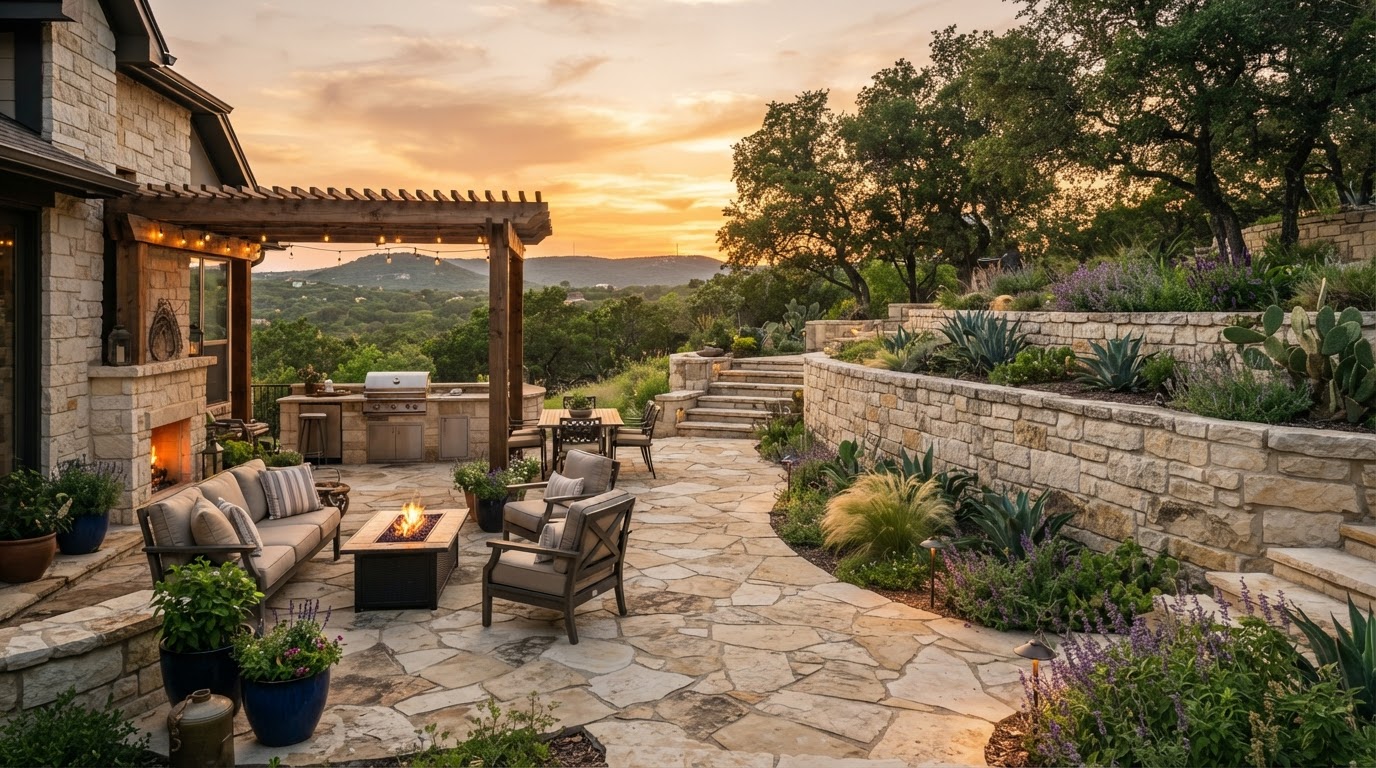
Hardscape is the structure of a landscape: patios, retaining walls, walkways, steps and seating. In Austin it also does real engineering work, retaining walls manage the grade changes and drainage that clay soil and hill-country slopes create.
Patios
Flagstone
$18 to $28 / sq ft
Heat in August: Moderate. Lighter coloured stone stays cooler than dark.
Clay soil movement: Set in sand or mortar. Sand-set flexes with clay soil, mortared does not.
Maintenance: Occasional re-pointing if mortared. Sand-set may need leveling every few years.
Pavers
$15 to $25 / sq ft
Heat in August: Moderate to warm. Lighter colours are cooler.
Clay soil movement: Flexible system handles clay movement well. Individual pavers can be re-leveled.
Maintenance: Low. Polymeric sand may need refreshing every few years. Pressure wash as needed.
Poured Concrete
$10 to $18 / sq ft
Heat in August: Coolest option in light colours. Stamped and coloured options available.
Clay soil movement: Rigid. Can crack in clay without proper base and control joints. We cut joints to manage this.
Maintenance: Seal every few years. Control joints are intentional, not a defect.
Decomposed Granite
$6 to $12 / sq ft
Heat in August: Cool underfoot. Good for paths and casual patios.
Clay soil movement: Flexible. Can erode in heavy rain without proper edging and compaction.
Maintenance: Top off and re-compact every few years. Stabilised DG holds up better.
Retaining Walls
There is a difference between a decorative wall that holds back a garden bed and a structural wall that holds back a slope. We design for the actual load, not for what looks adequate.
In Texas, walls over four feet generally require engineering. We bring in a licensed engineer at that threshold, and sometimes below it if the wall supports a structure or a driveway.
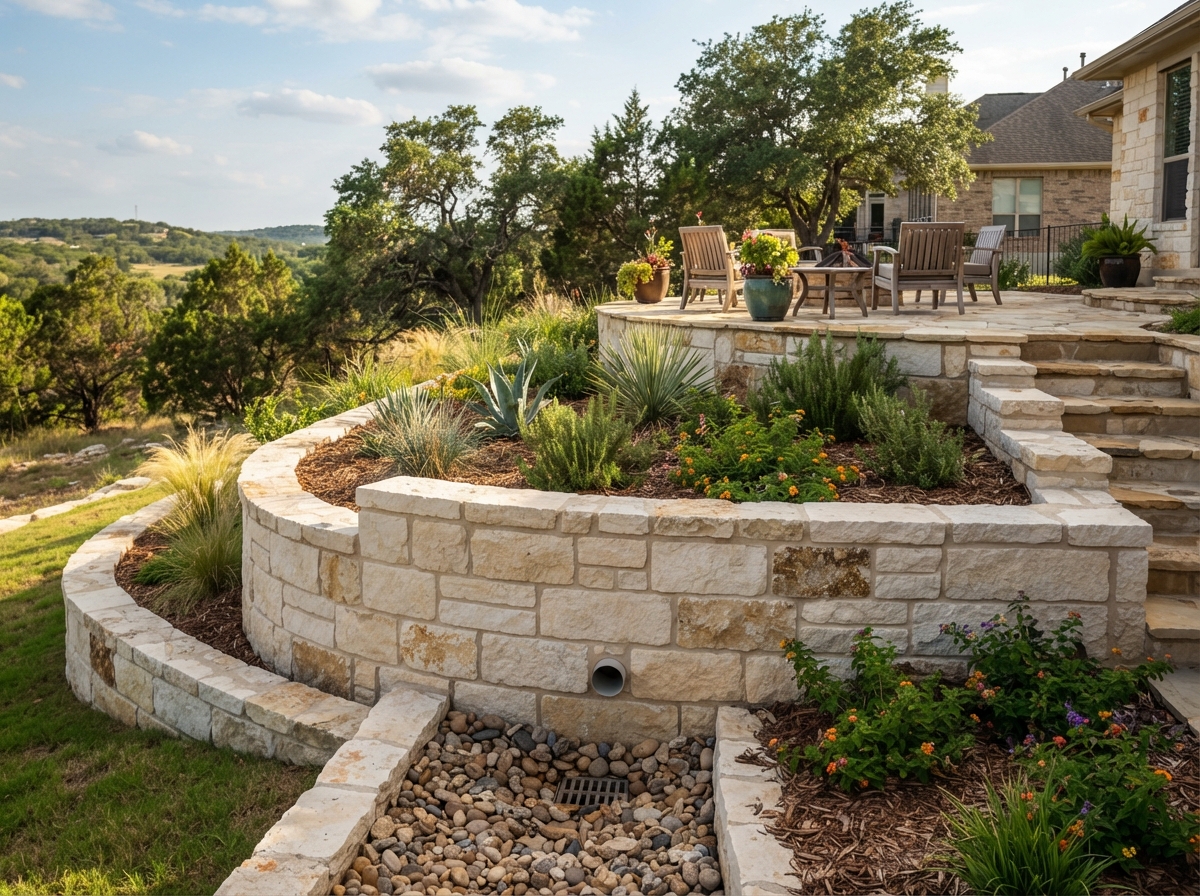
The number one reason retaining walls fail is lack of drainage behind the wall. Hydrostatic pressure from waterlogged soil pushes the wall over time. Every wall we build has drainage gravel, weep holes or a drain pipe behind it. This is not optional.
Material options: limestone block for a natural hill-country look, segmental retaining wall units for engineered walls with precise geometry, and boulder walls for a more organic, rustic feel. Each has a different cost and a different aesthetic.
Walkways and Steps
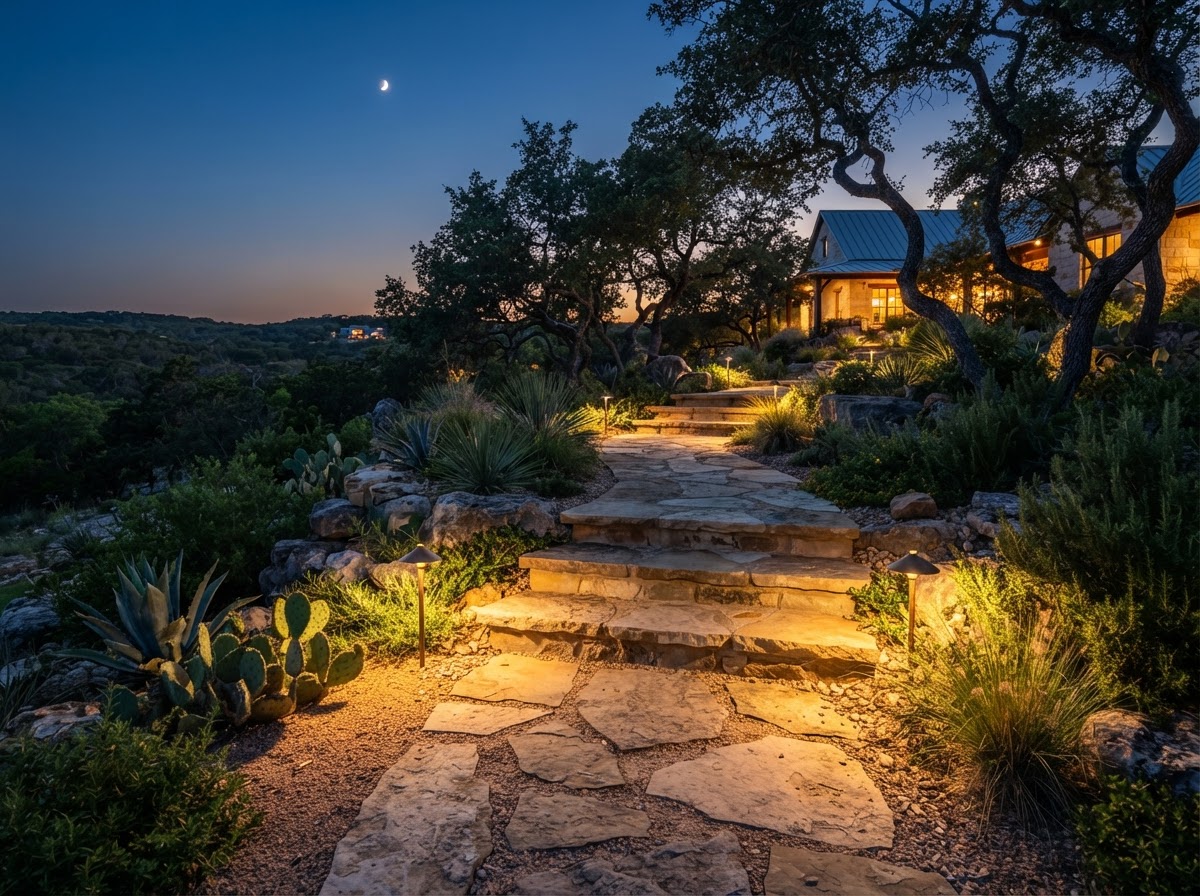
A comfortable step has a tread depth of at least 11 inches and a riser height of 6 to 7 inches. We design steps for how feet actually move, not just for how they look in a drawing.
Walkway width matters: 36 inches is the minimum for a functional path, 48 inches lets two people walk side by side. We size paths to the traffic they will carry.
Lighting is integrated into the hardscape, not bolted on later. Step lights set into risers and path lights along edges are planned during construction, not added as an afterthought.
Outdoor Living
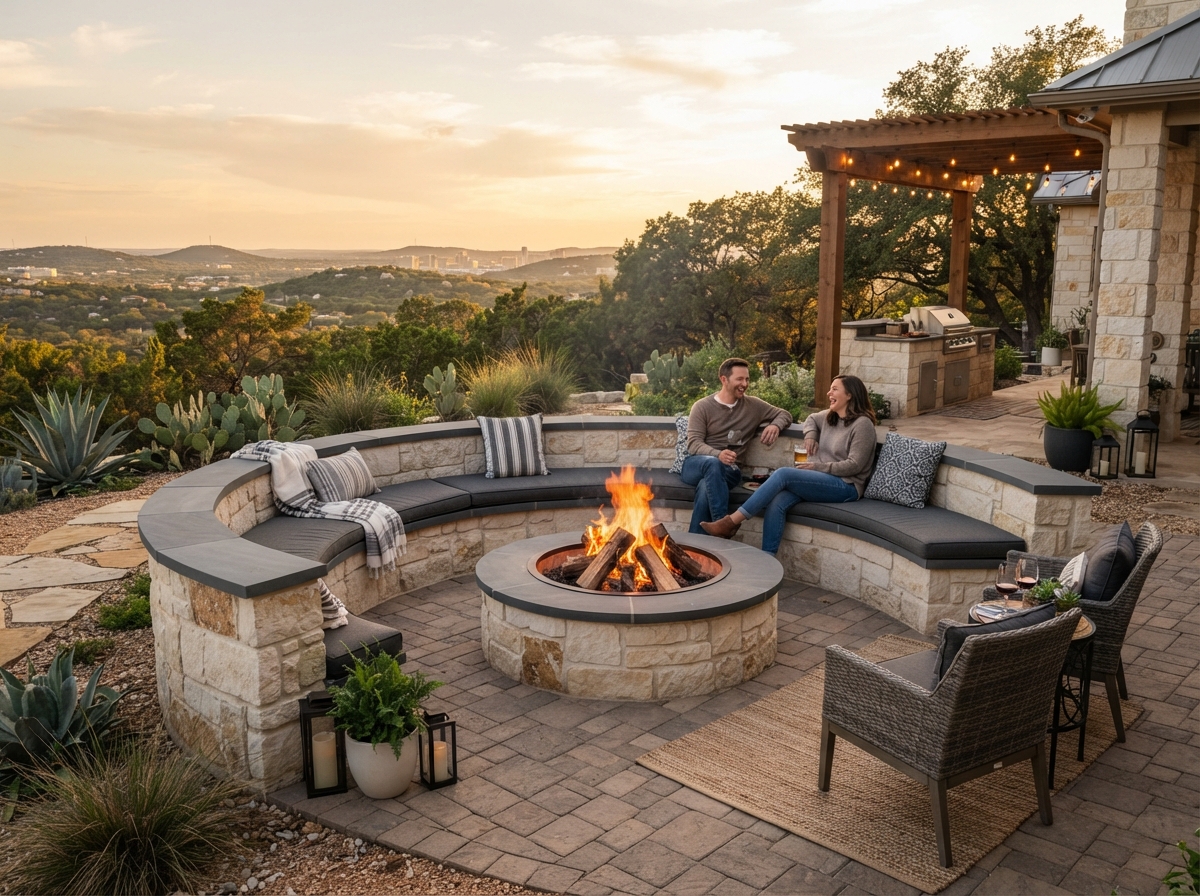
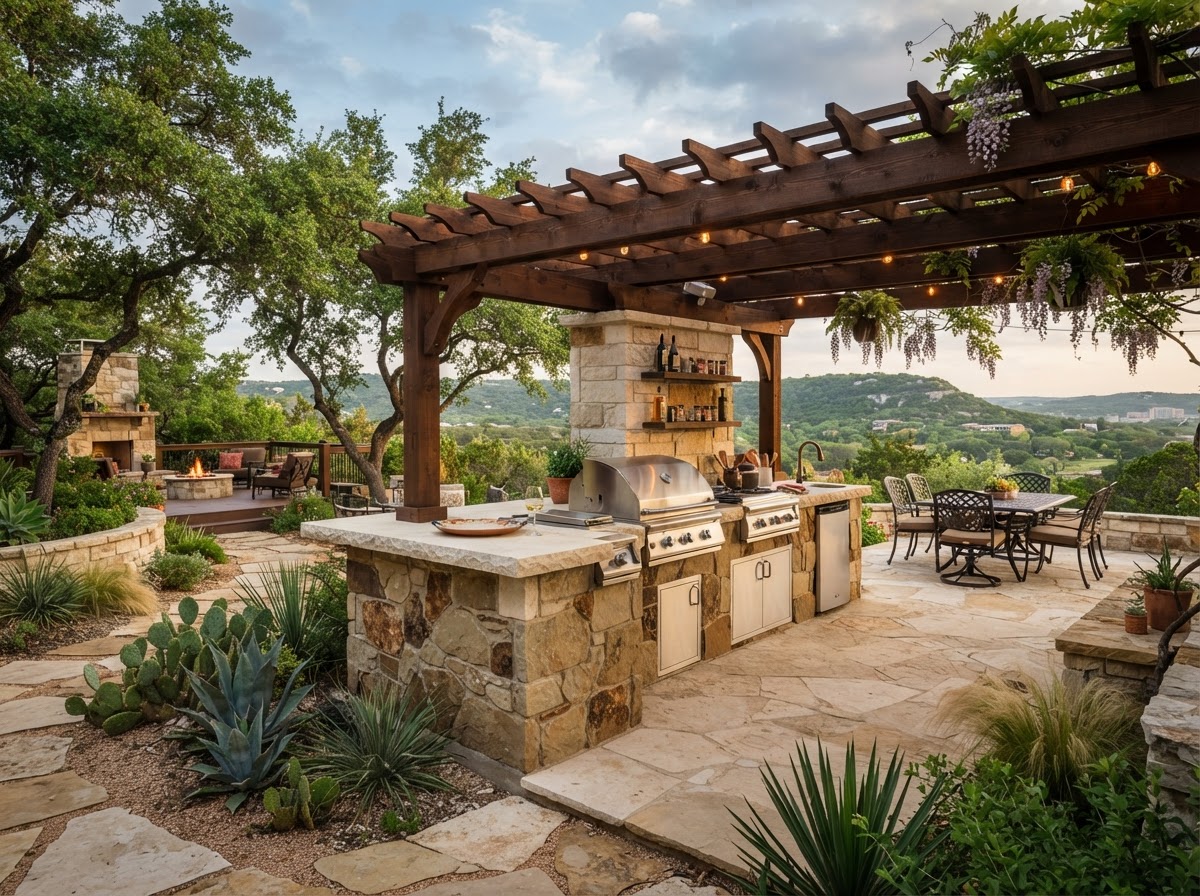
Outdoor kitchens, fire pits, fireplaces, pergolas and seating walls extend the usable square footage of a home. In Austin, shade is the limiting factor on how usable an outdoor space actually is between June and September. We design shade into every outdoor living project.
A pergola or covered patio is not a nice-to-have here, it is the difference between a space that gets used and one that does not. We orient shade structures to block afternoon sun from the southwest, which is when the heat is worst.
Fire features extend the usable season into the cooler months. A fire pit or fireplace turns a January evening outside from a cold idea into a good one.
Drainage Is Part of the Hardscape
This is the Austin-specific engineering section. Clay soil expands when wet and shifts against slab foundations. Water running toward the house is not just a nuisance, it is a structural problem.
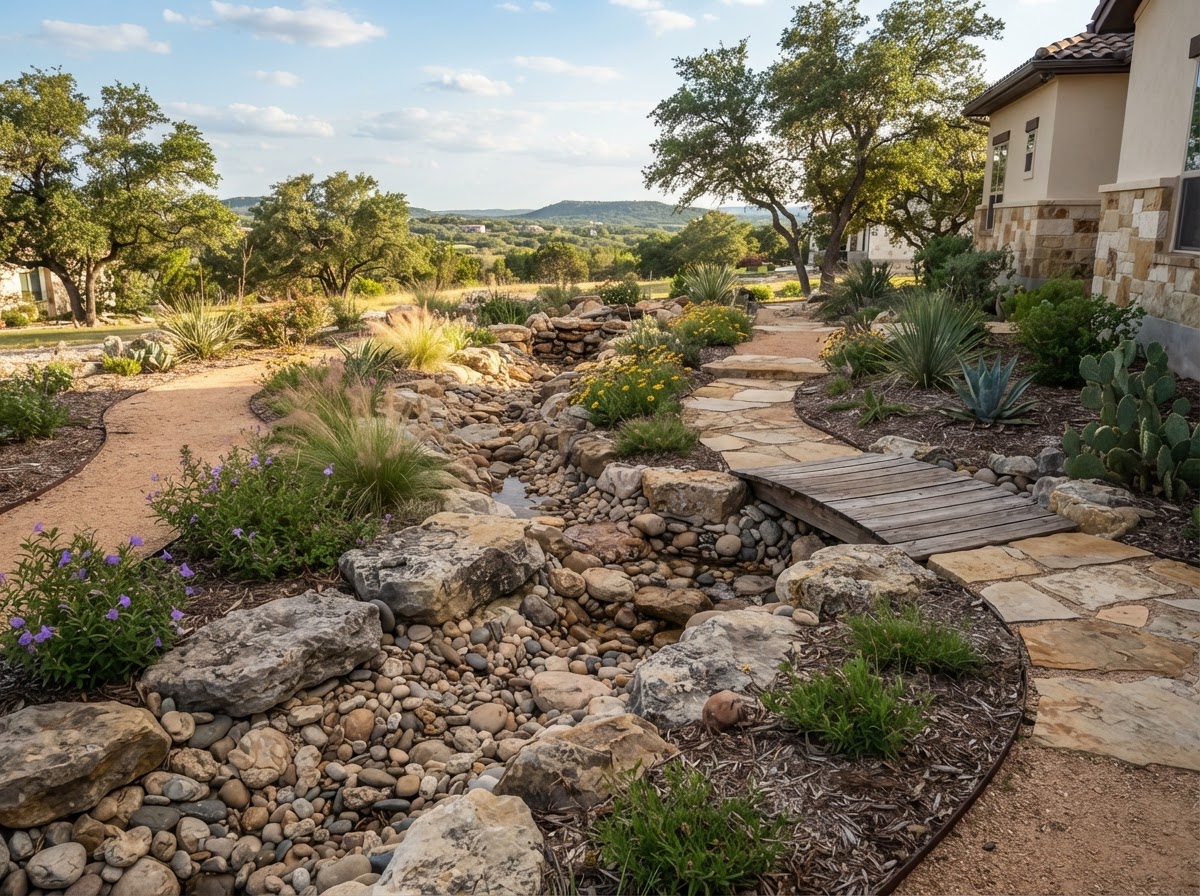
Every hardscape we build starts with grading. We solve where water goes before anything is laid. French drains, dry creek beds, and surface grading are integrated into the design, not patched in after a problem appears.
Permeable surfaces help: decomposed granite, permeable pavers, and gravel allow water to infiltrate rather than sheet-flowing across a patio toward the foundation. We use them where they fit the design.
If your yard slopes toward the house, the hardscape has to fix that. A patio that traps water against a slab is worse than no patio at all.
Materials That Belong in Central Texas
Local Texas limestone is the natural choice for walls and veneer in this region. It weathers well, matches the hill-country aesthetic, and does not have to travel far.
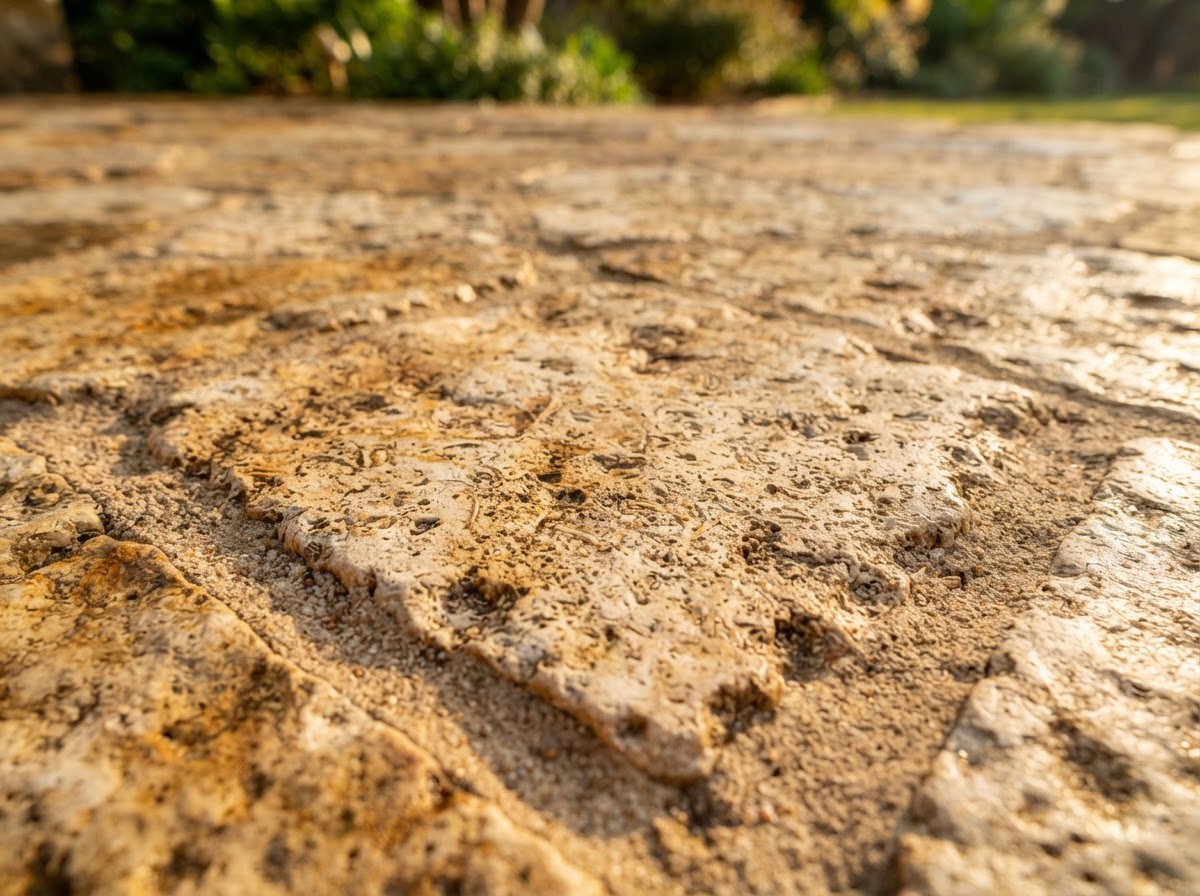
Oklahoma and Texas flagstone are the standard for patios and walkways here. They handle the heat and the soil movement better than most imported stone.
Imported materials like bluestone and slate can look beautiful but some do poorly in Central Texas heat and alkaline soil. We will tell you which ones to avoid and why, rather than installing something that will fail in three years.
What It Costs
Patio: $10 to $32 per square foot depending on material. A 400 square foot patio runs $4,000 to $13,000.
Retaining wall: $45 to $85 per linear foot for walls under 4 feet. Taller walls with engineering run $85 to $150 per linear foot. Boulder walls are typically less, limestone block is in the middle, and engineered segmental walls are at the top.
Outdoor kitchen: $8,000 to $30,000 depending on appliances, counter material, and whether it is covered. A built-in grill island starts around $8,000. A full kitchen with bar, sink, and pergola can reach $30,000.
What moves the number: access for equipment (tight side yards cost more), rock excavation (common in west Austin and Lakeway), grade change, and drainage requirements. We quote honestly and show you where each dollar goes.
Portfolio Gallery
Cedar Park
Austin
Lakeway
Bee Cave
Round Rock
Leander
Frequently Asked Questions
Book a Hardscape Consultation
Service areas across the Austin metro:
