
Austin LandscapeLighting
Make your garden usable after dark. Designed with restraint, installed to last.
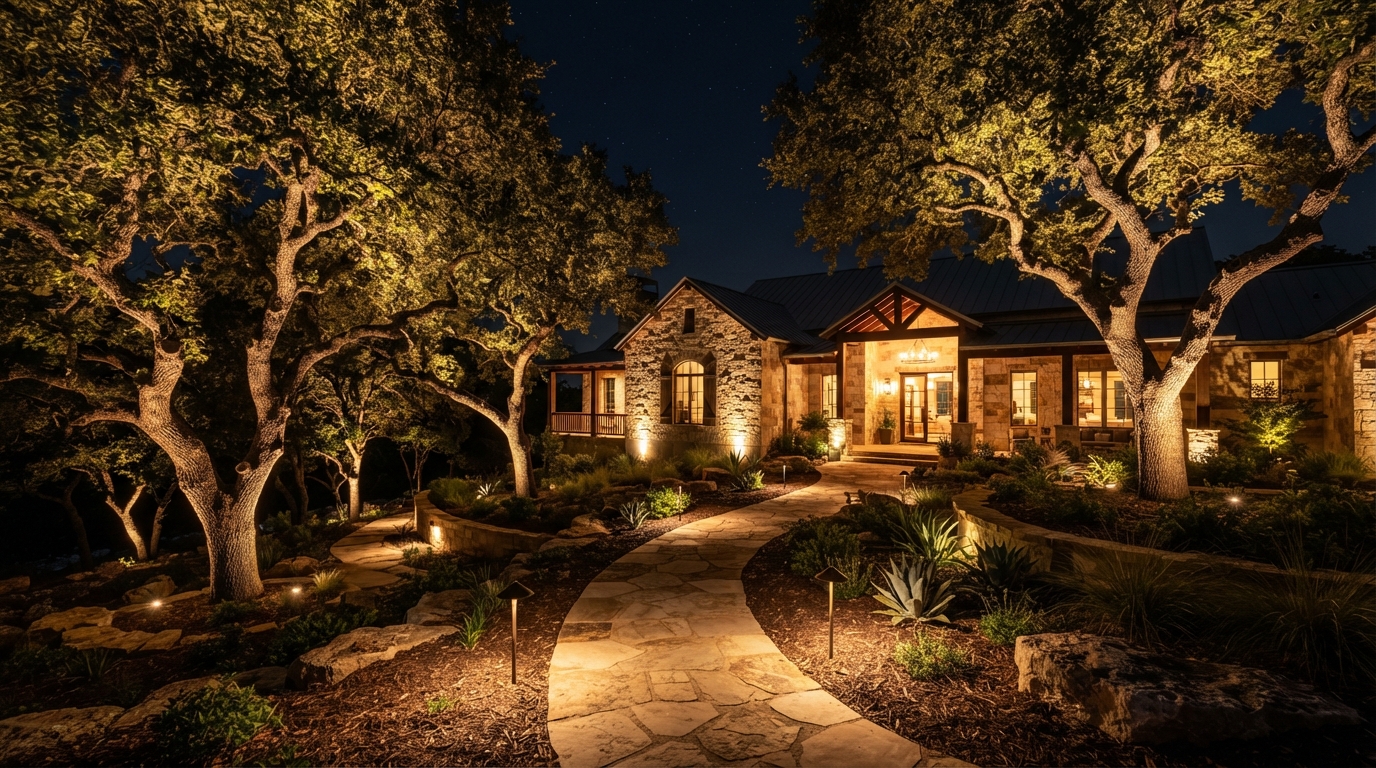
Landscape lighting does two jobs: it makes a garden usable after dark and it makes a house look considered from the street. Good design is mostly restraint, uplighting a few live oaks, washing a stone wall, and keeping fixtures out of sight lines.
Lighting Techniques
Uplighting Trees
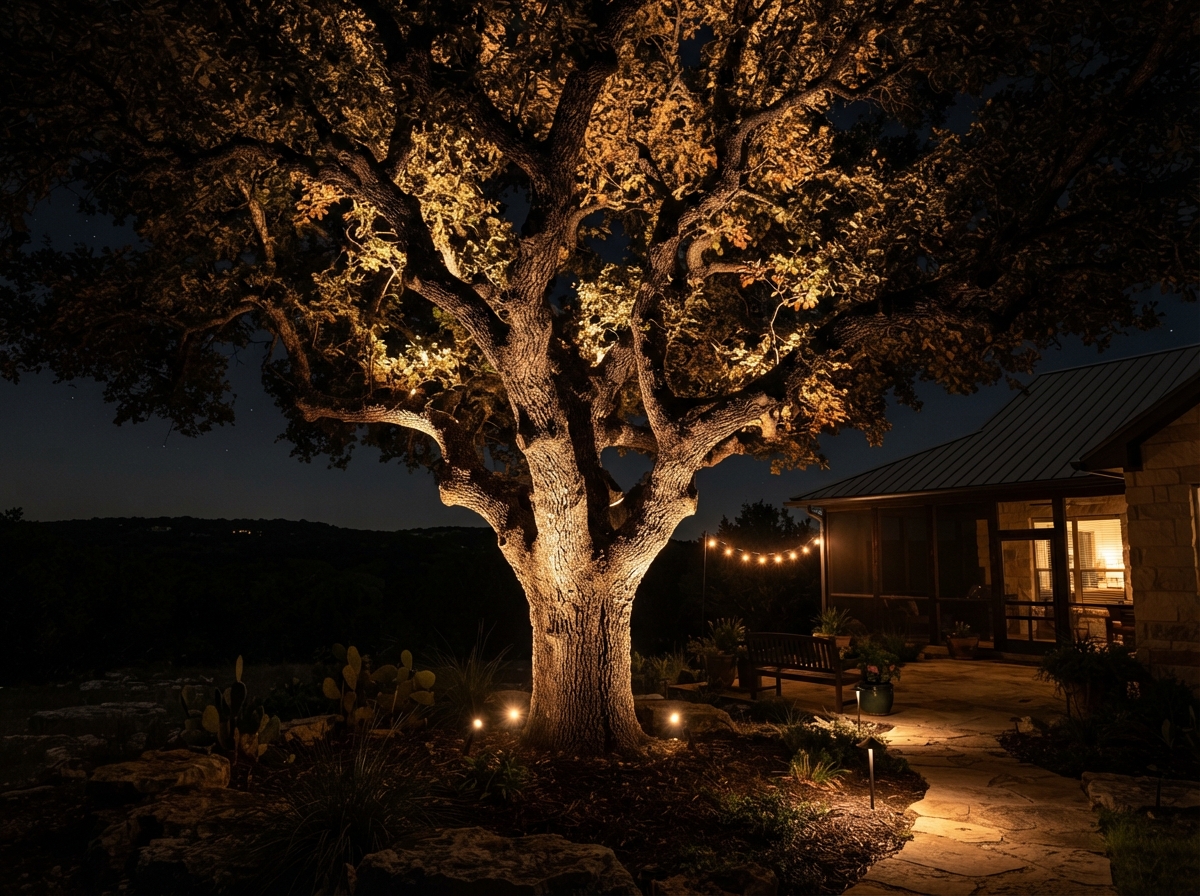
A fixture at the base of a tree aimed up through the canopy. This is the most dramatic effect in landscape lighting and the one that defines the nighttime character of a property.
Path and Step Lighting
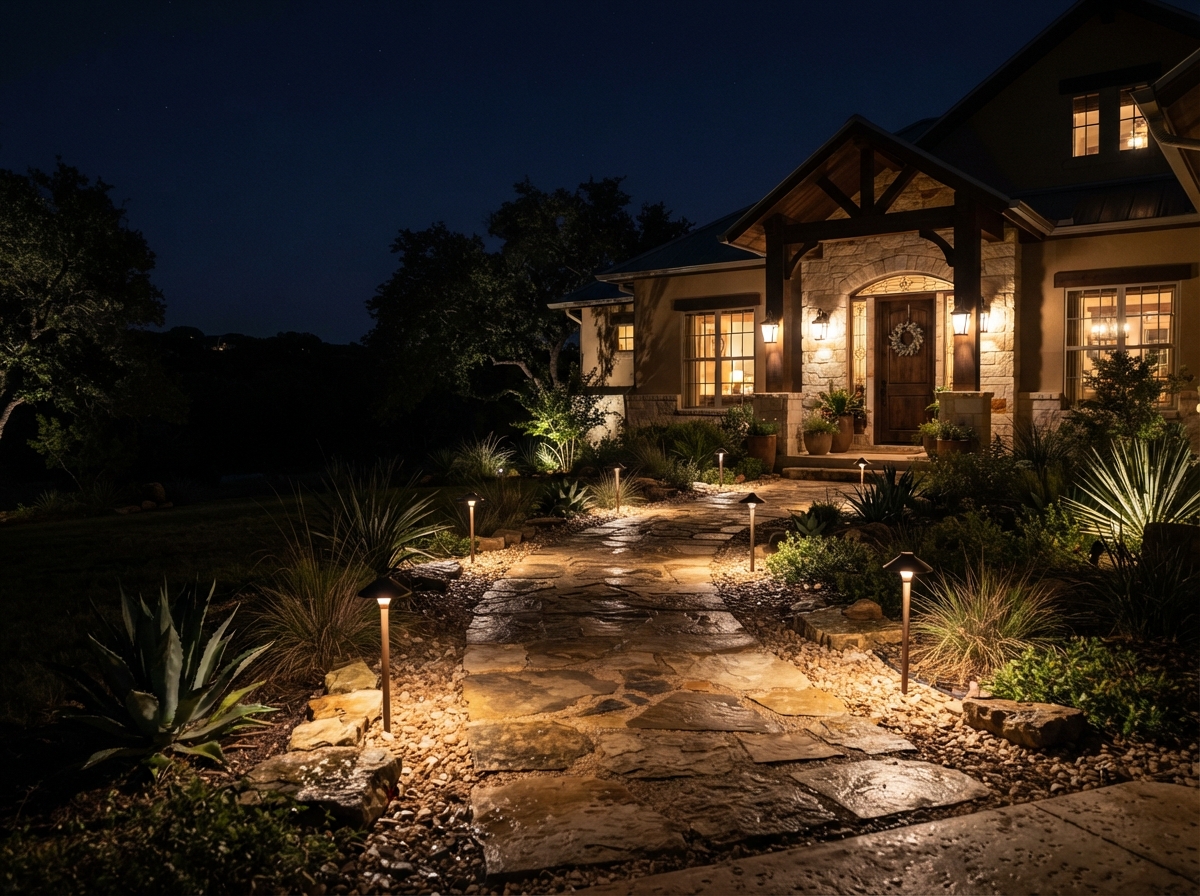
Low fixtures along walkways and steps. They guide guests safely and mark grade changes without lighting the whole yard like a parking lot.
Wall Washing and Grazing
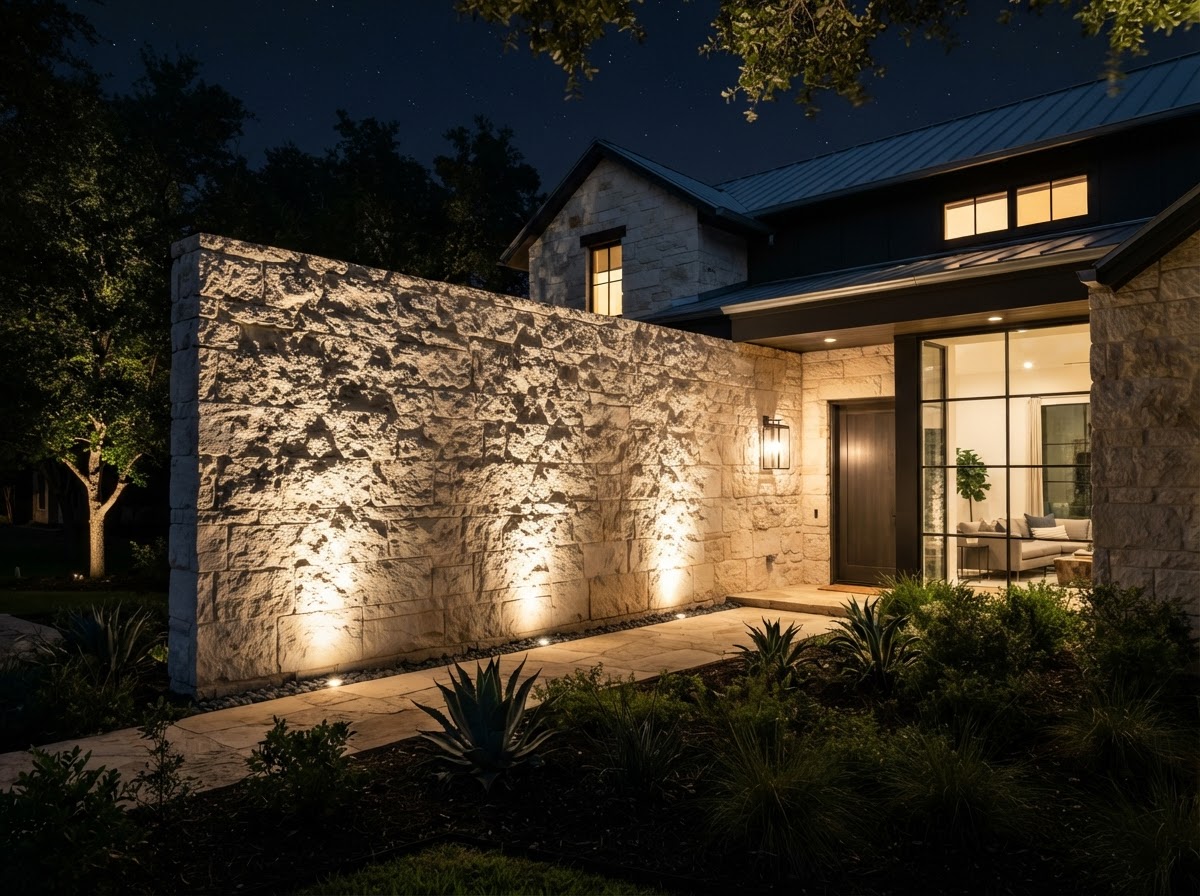
A soft, even wash of light across a stone or stucco wall. Grazing places the fixture close to the wall so the texture of the stone throws shadow and depth.
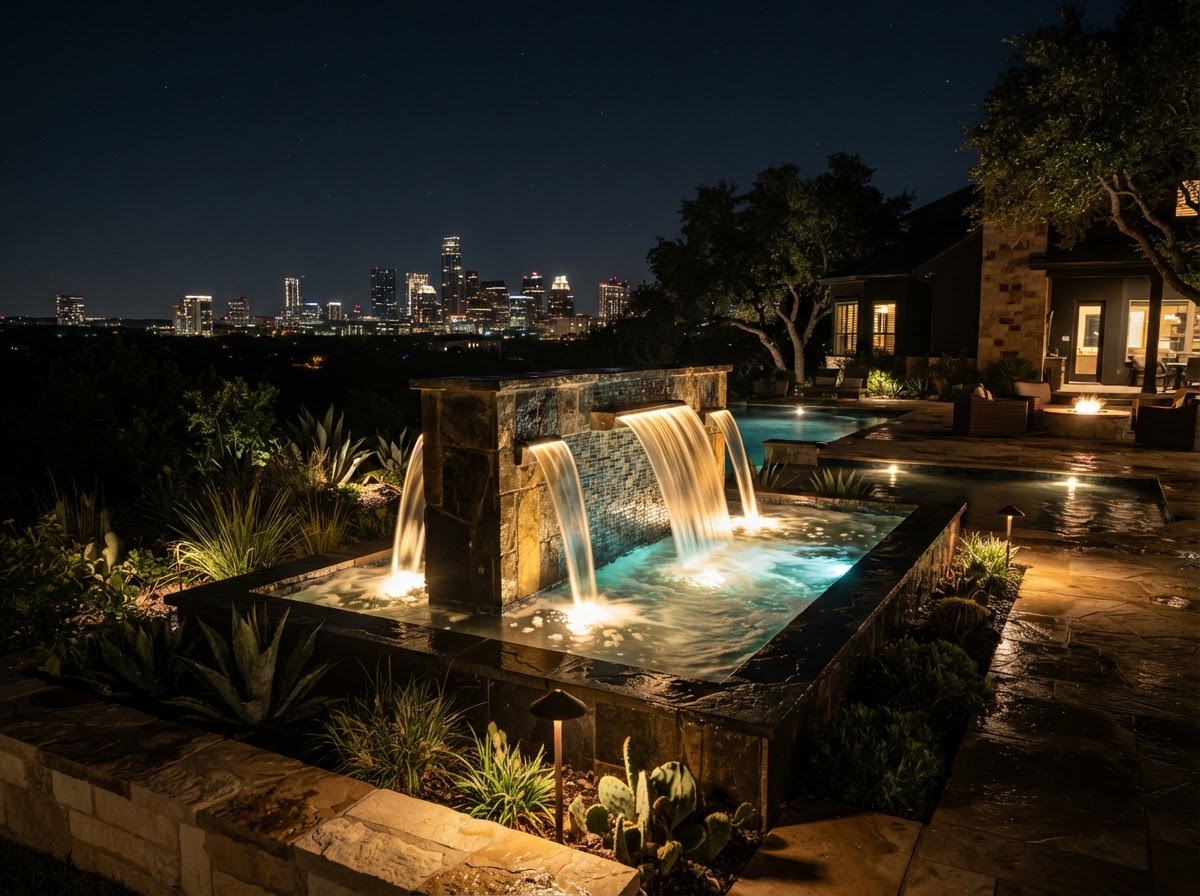
Water Feature Lighting
Submersible fixtures inside a fountain or aimed across a pool. Moving water catches and refracts light in a way no other surface can.
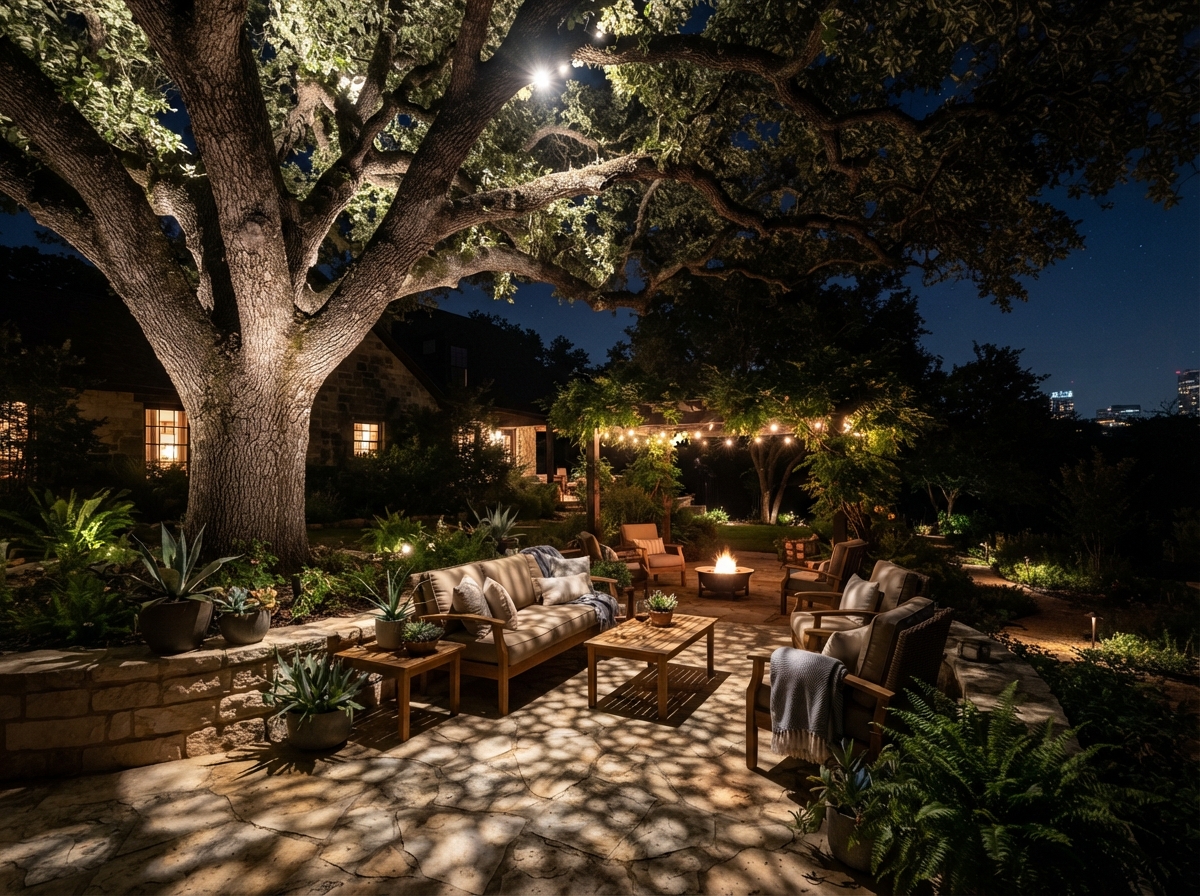
Downlighting and Moonlighting
Fixtures mounted high in a tree canopy aimed down through the branches. The dappled pattern on the ground below reads as moonlight filtering through leaves.
Low-Voltage vs Line-Voltage
Low-Voltage (12V or 24V)
- Safe to touch and handle without an electrician
- Cable can be buried shallow, no deep trenching
- Easy to move or add fixtures as the garden grows
- Low running cost, a fraction of line-voltage
Line-Voltage (120V)
- - Requires deep trenching and conduit by code
- - Licensed electrician needed for every change
- - Higher installation and running cost
- - Reserved for commercial or structural applications
Almost all residential landscape lighting is low-voltage. It is safer, cheaper to run, and flexible enough to move as plants mature.
Designing for a Live Oak
Heritage live oaks are the defining feature of many Central Texas properties and they are the single best lighting subject in the landscape. A mature multi-trunk canopy lit from below becomes the focal point of the entire yard at night.
Fixture placement matters. We set uplights at the base of the trunk, angled to graze the bark and spread through the canopy, never aimed straight up the trunk where the light traps. For a wide canopy we use two or three fixtures on different sides to avoid a flat, one-dimensional look.
Root protection is non-negotiable. We do not trench through the root zone of a heritage tree. Cable is routed around the drip line, and fixtures are staked without cutting major roots. As the tree grows, we adjust aim and add fixtures to keep the light balanced.
Being a Good Neighbour
Glare Control
Every fixture is aimed and shielded so the light lands on the tree or wall, not in your neighbour's bedroom window. We use hooded fixtures and shutters where needed.
Warm Colour Temperature
We use 2700K to 3000K lamps, which reads as warm candlelight. Cool blue LEDs look harsh and institutional, and they attract fewer insects as a bonus.
Dark-Sky Considerations
Shielded fixtures direct light downward and reduce skyglow. This matters in Hill Country communities where the night sky is part of the appeal of living there.
Less Is More
A few well-placed fixtures look designed. A fixture every three feet looks like a runway. We light the features that matter and leave the rest in shadow.
Security Lighting Done Well
A floodlight bolted to the wall is not a lighting design. It creates harsh shadows where someone can stand unseen, and it lights the side of your house whether anyone is there or not.
We integrate security into the design. Motion-activated zones sit on top of the architectural lighting, so the yard looks intentional at dusk and switches to full brightness when someone approaches. Dusk-to-dawn zones keep key paths and entrances lit all night at low levels, bright enough to see, dim enough to sleep near.
The result is a yard that looks designed at 9pm and secure at 2am, without a single visible floodlight.
Retrofitting an Existing Landscape
Adding lighting to established beds does not mean tearing them up. We route low-voltage cable along bed edges and behind shrubs, and stake fixtures in place without disturbing root systems. Most retrofits take one to two days.
If you have an old halogen system, we can upgrade it to LED using your existing wire if it is in good condition. LED lamps draw a fraction of the power, so your existing transformer usually has capacity to spare. You get the look of the old system with the running cost and lifespan of the new one.
What It Costs
Small Yard
$3,500 to $6,500
10 to 15 fixtures, front entry and key trees
Medium Yard
$6,500 to $12,000
20 to 35 fixtures, front and back, paths and features
Large Property
$12,000 to $25,000+
40+ fixtures, full property, multiple transformers
What moves the number: transformer capacity (larger systems need more), cable runs (long runs need heavier gauge wire), and whether hardscape has to be cut to lay wire. We give you a fixed quote after a walkthrough, not an estimate that changes.
Before and After
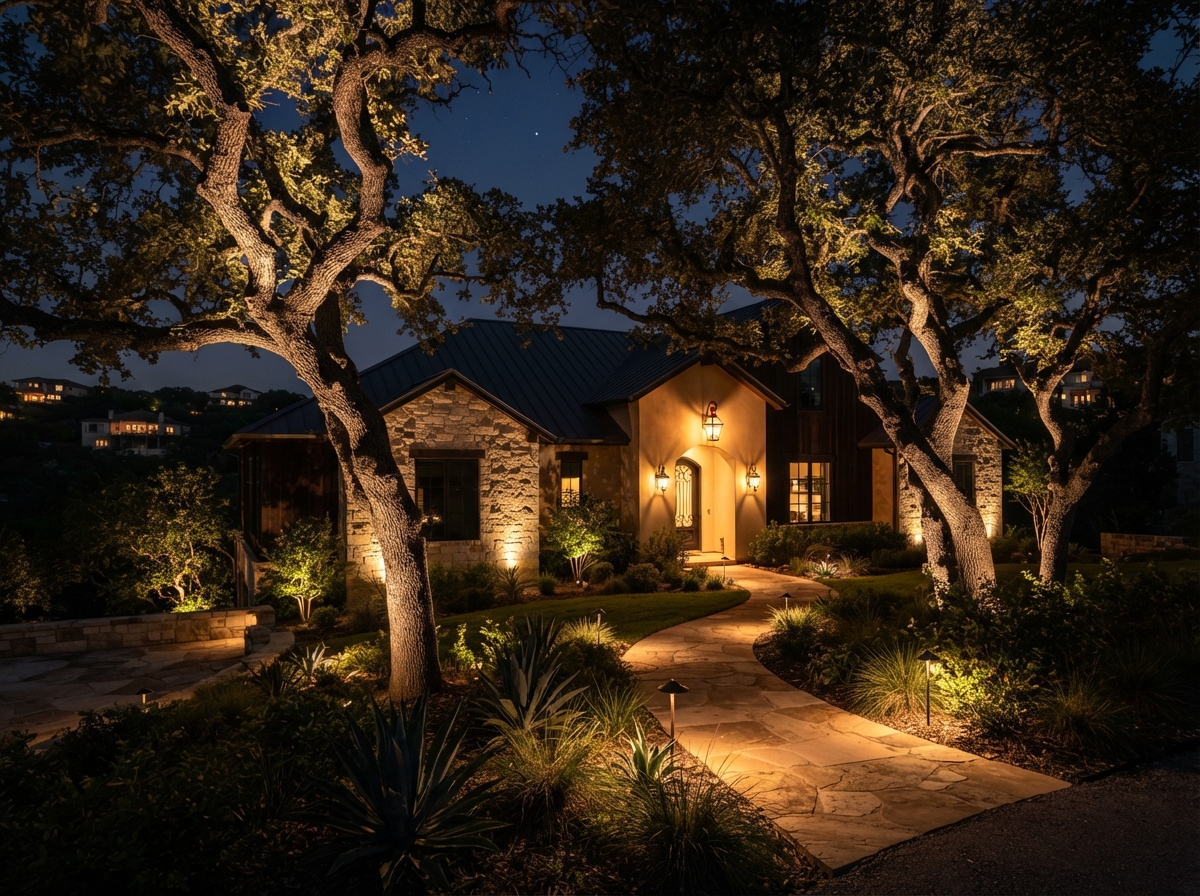
Westlake Hills
Uplighting on heritage live oaks, path lighting to the entry
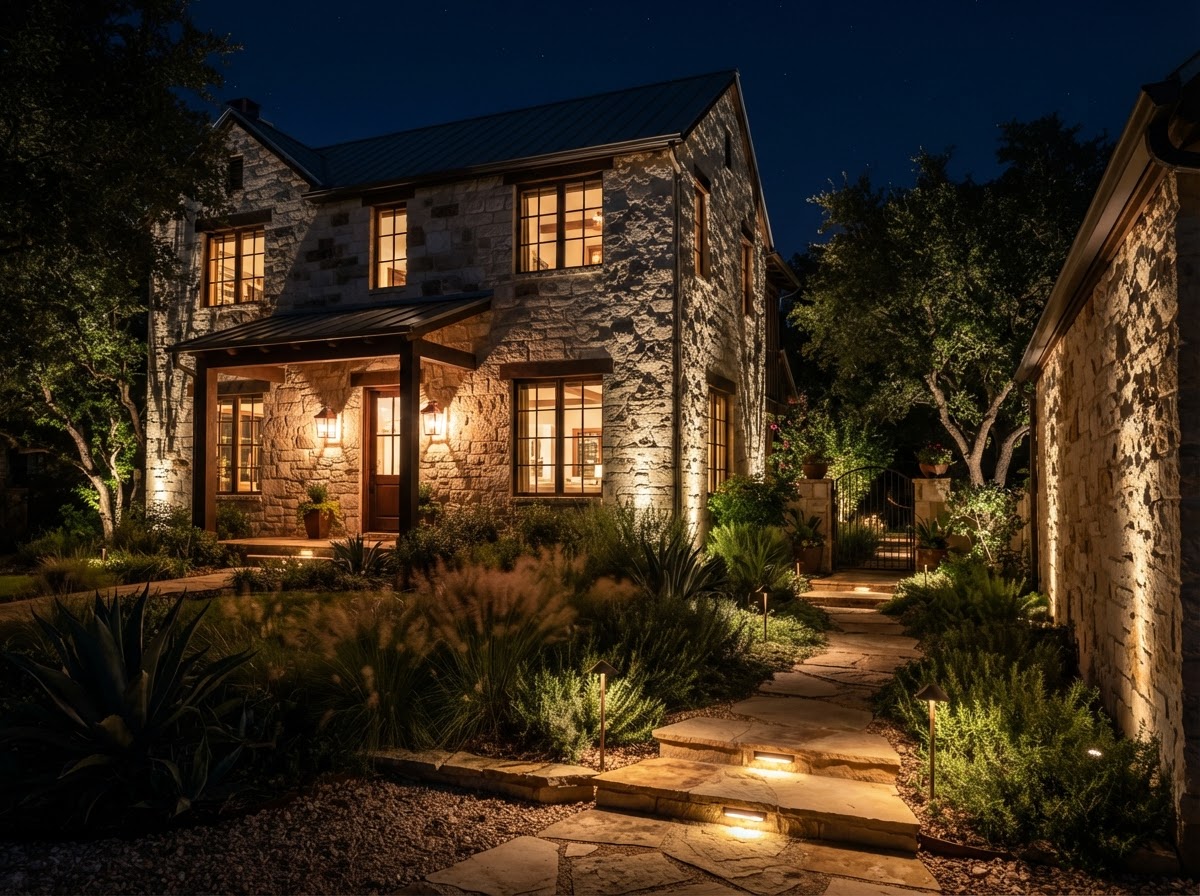
Tarrytown
Wall grazing on limestone, step lights on the side garden
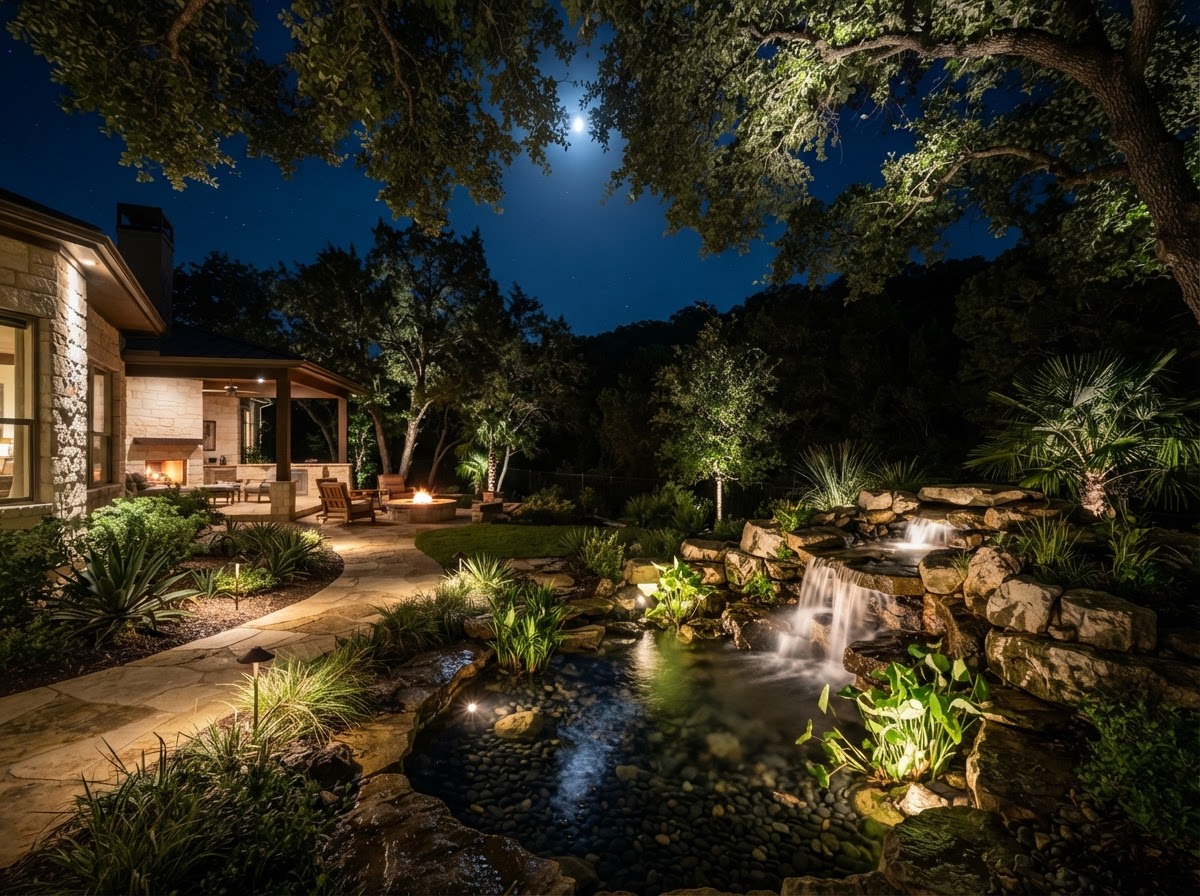
Barton Creek
Moonlighting from the canopy, water feature lit from below
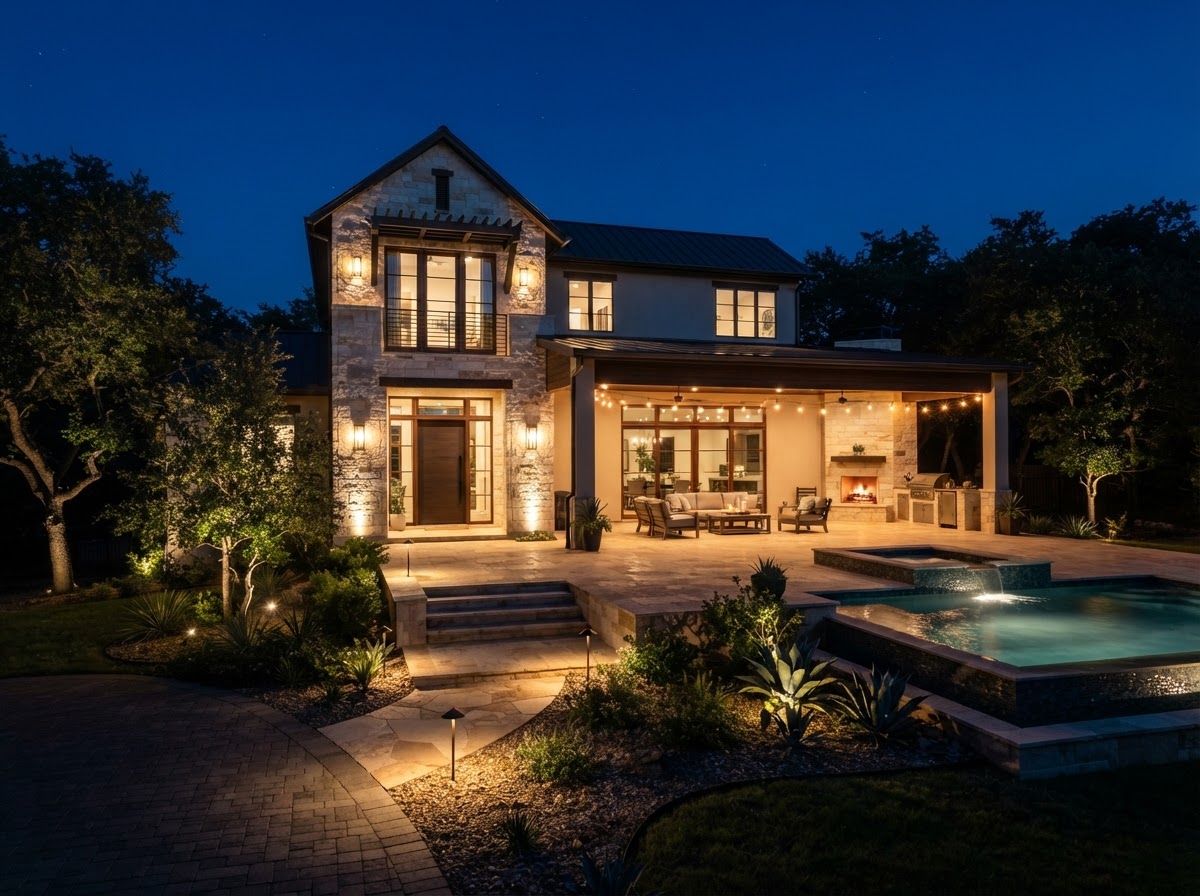
Rollingwood
Architectural wash on the facade, downlighting over the patio
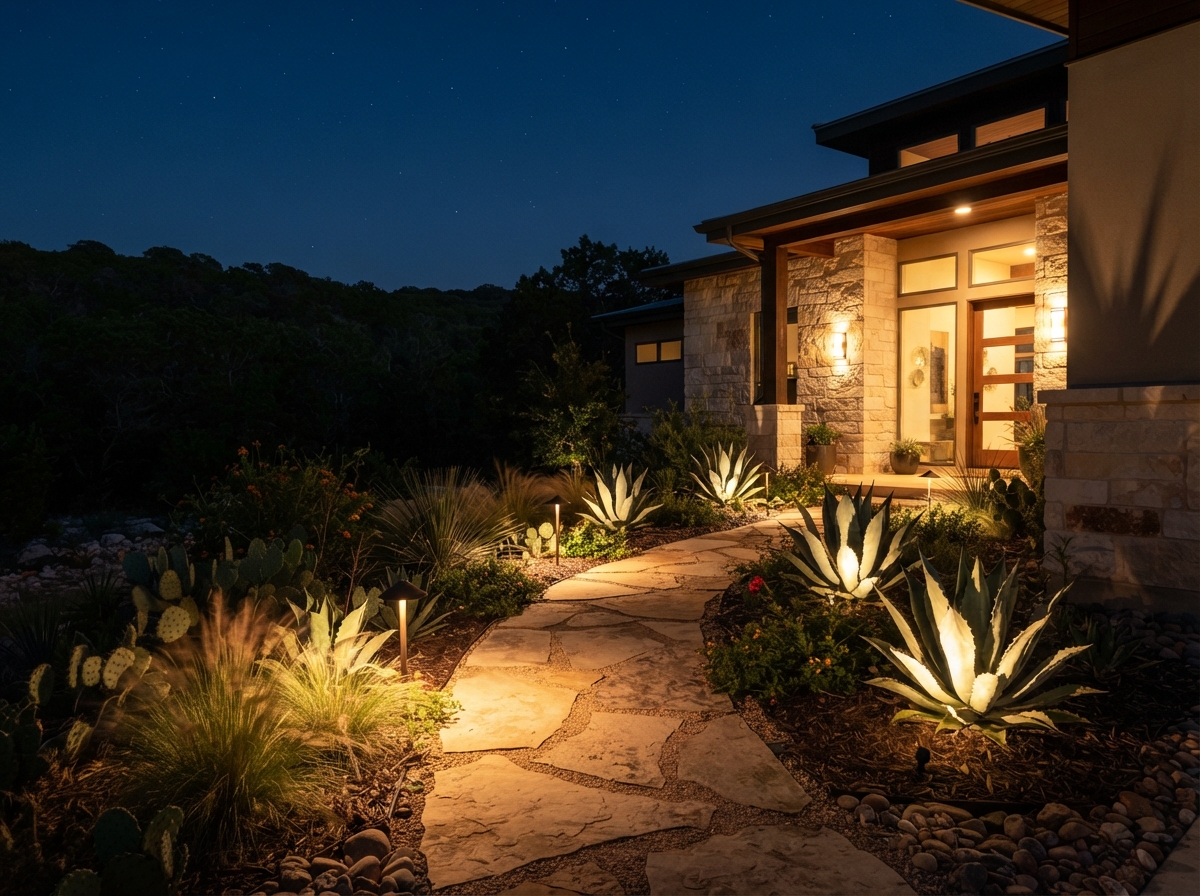
Lost Creek
Path lighting through the native bed, uplighting on agaves
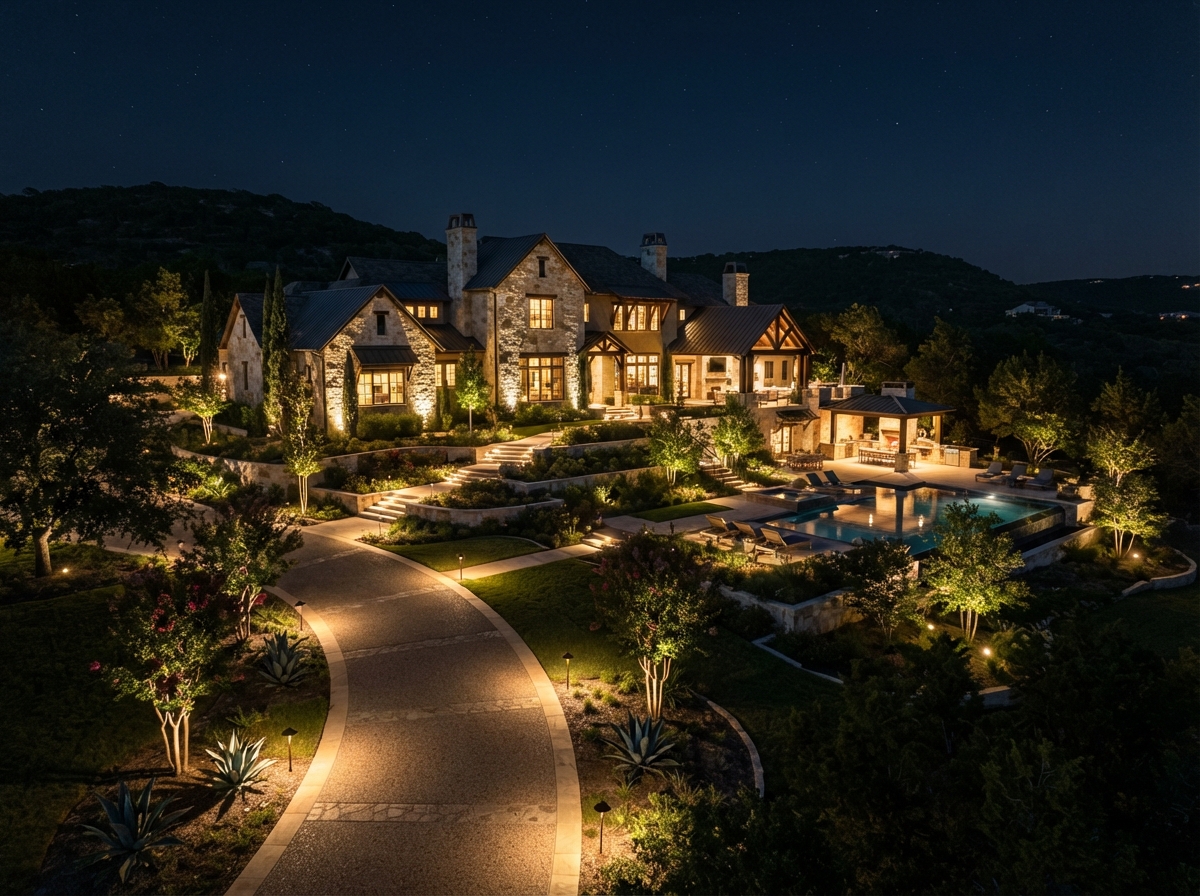
Rob Roy
Full property system, security zones integrated into the design
Frequently Asked Questions
Book a Lighting Consultation
Tell us about your property and we will come out after dark to walk the yard with you and show you what is possible.
Related services
