
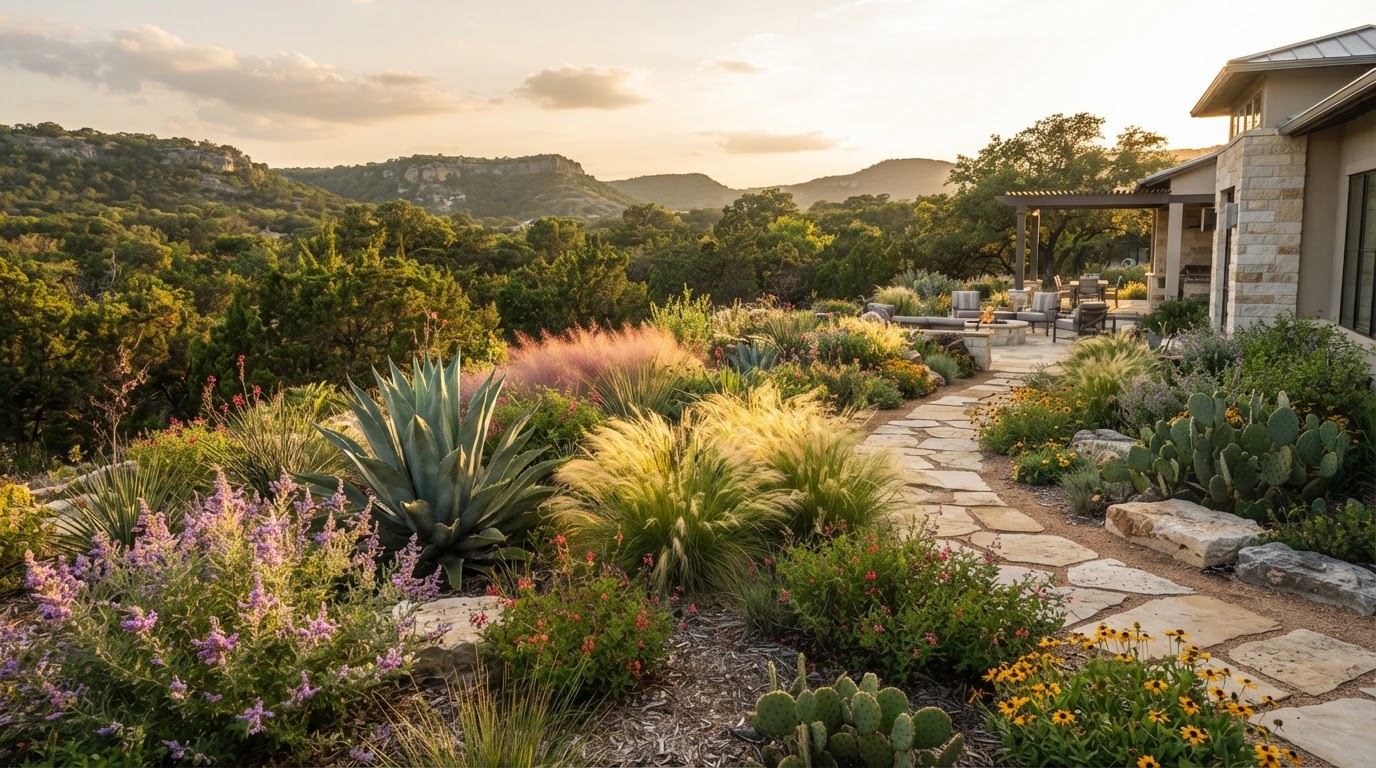
Xeriscaping is not gravel and cactus. It is designing with plants that thrive on Central Texas rainfall once established, natives and adapted species, deep mulch, and irrigation sized to actual need. Done properly it looks lusher than a struggling lawn and survives restrictions without dying.
The Myth, Addressed Directly
What People Picture
- ✗ A yard of bare gravel and river rock
- ✗ Cactus and agave, nothing else
- ✗ Brown and dead looking most of the year
- ✗ A landscape that looks like a parking lot median
What We Actually Build
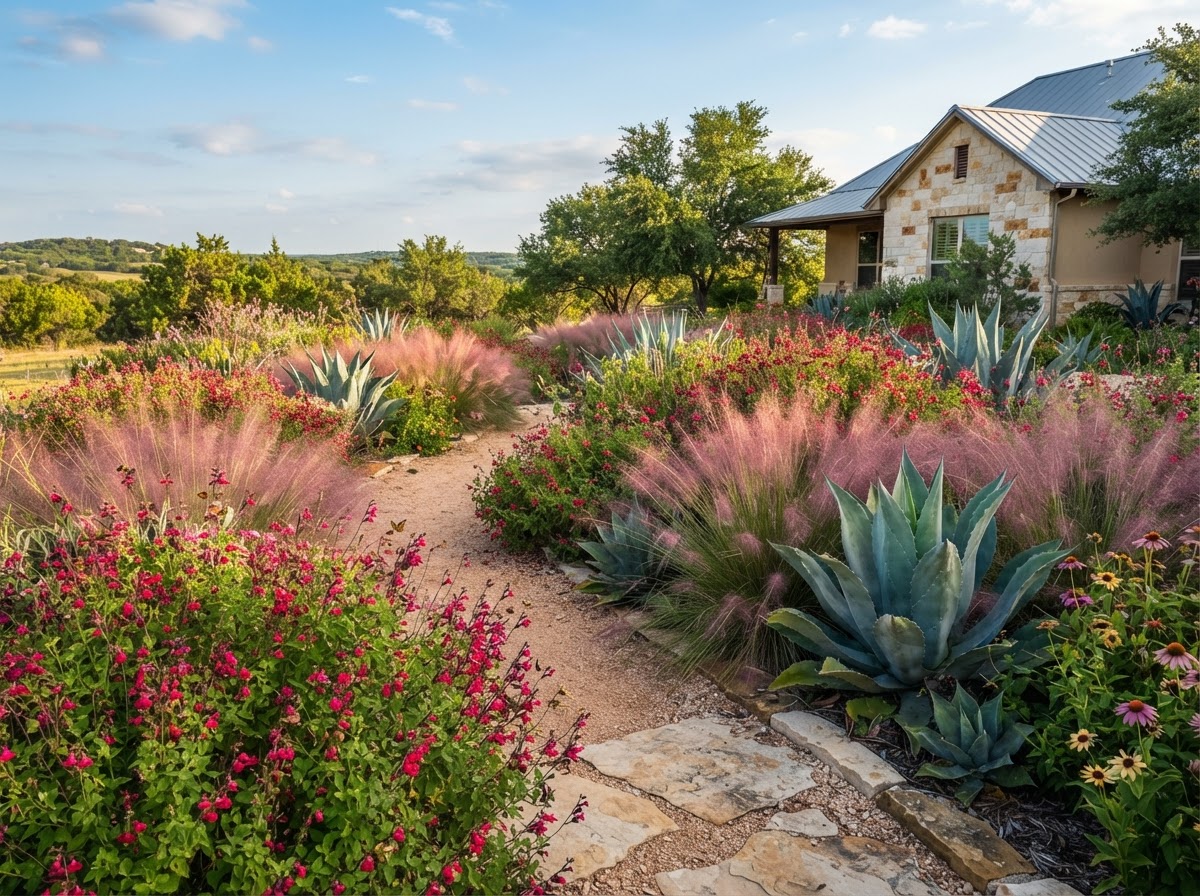
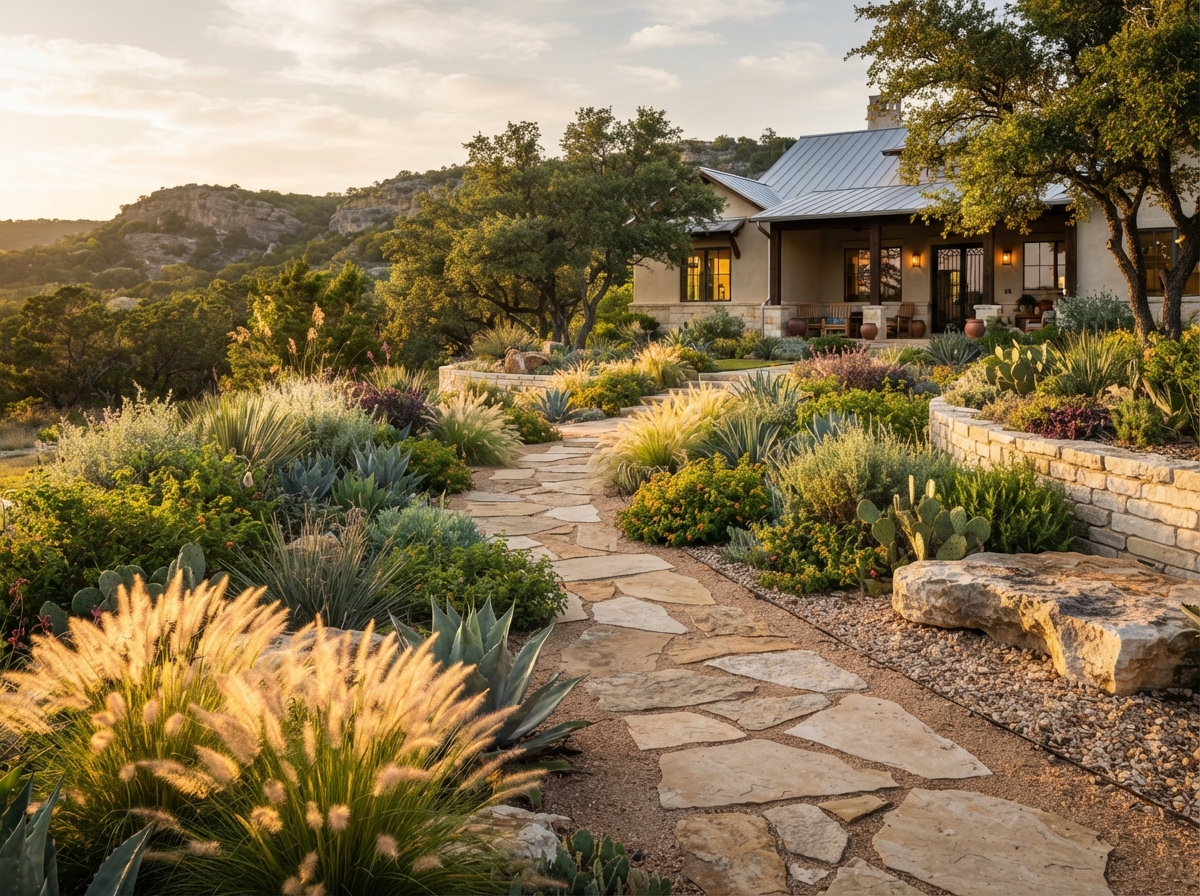
- Layered beds with colour, texture and movement
- Native perennials that bloom spring through fall
- Ornamental grasses that catch light and sway in the breeze
- A garden that looks intentional, designed, and alive
The Seven Principles
Planning and Design
We start with a site plan that accounts for sun exposure, drainage, and how you use the space before any plant goes in the ground.
Soil Improvement
Central Texas soil is thin and alkaline. We amend with compost where needed so roots can establish and hold water.
Appropriate Turf Areas
Turf only where it earns its water: play areas and high traffic. The rest becomes beds, groundcovers, or permeable paths.
Efficient Irrigation
Drip on beds, rotors only on remaining turf, zoned by plant water need. A smart controller and rain sensor keep it legal.
Mulching
Three to four inches of hardwood mulch holds moisture, cools roots, and suppresses weeds. It is the cheapest water savings available.
Low-Water Plant Selection
Natives and adapted species chosen for your specific sun, soil, and aesthetic. Plants that want to be here.
Maintenance
Xeriscapes need less maintenance, not zero. Pruning, mulch refresh, and irrigation checks keep it looking sharp.
The Austin Plant Palette, By Sun Exposure
What actually survives an Austin August. These are plants we have installed and watched perform for years.
Full Sun
Texas Sage
Silver foliage, purple blooms after rain, thrives in full sun and reflected heat.
Blackfoot Daisy
Low mounding perennial, white flowers spring through fall, no supplemental water once established.
Damianita
Aromatic foliage, golden yellow flowers, stays compact in full sun.
Salvia greggii
Blooms spring to frost, deer resistant, available in red, pink and white.
Gulf Muhly
Pink-purple fall plumes, tolerates drought and poor soil.
Lindheimer Muhly
Larger clumping grass, silver seed heads, good winter structure.
Agave
Architectural accent, zero water once established, comes in many sizes and forms.
Yucca
Evergreen structure, cream flower spikes, handles the worst soil and full sun.
Part Shade
Mexican Feathergrass
Fine textured, moves in the breeze, softens hardscape edges.
Rock Rose
Pink hibiscus-like flowers, blooms from spring to fall, tolerates afternoon shade.
Flame Acanthus
Orange-red tubular flowers, hummingbird magnet, dies back in winter and returns.
Shade
Texas Betony
Spikes of coral-red flowers, thrives in dry shade under trees.
Sedges
Lawn alternative for shade, stays green with minimal water, mows to 4 inches or left natural.
Lawn Alternatives and Turf Reduction
Buffalo grass and habiturf are native turf alternatives that survive on half the water of St. Augustine. They go dormant in winter and need mowing about once a month in summer, not weekly.
For shaded areas where no turf grows well, native sedges form a green, low groundcover that needs no mowing and minimal water.
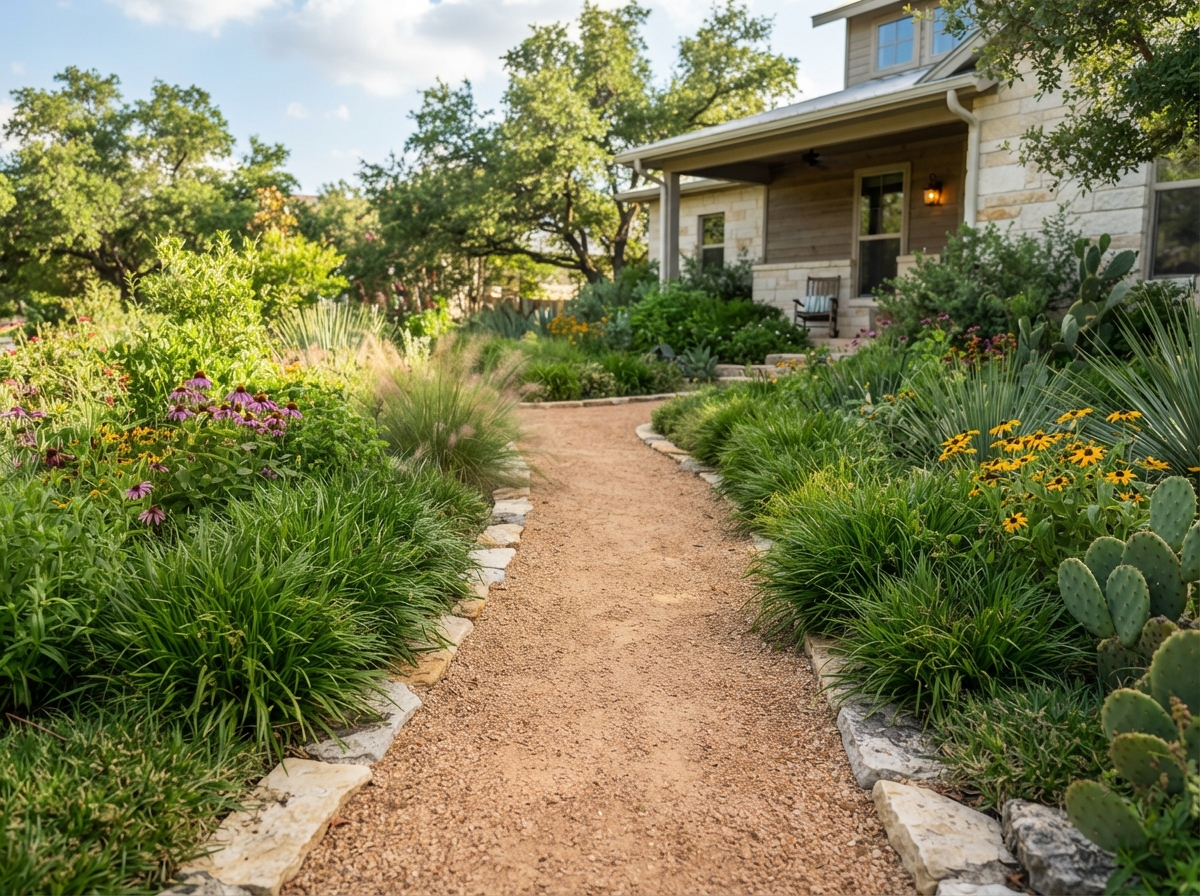
Decomposed granite paths and flagstone stepping stones reduce turf area while adding structure. Every square foot of lawn converted to bed or path is water you are not paying for.
Removing 1,000 square feet of St. Augustine and replacing it with native beds saves roughly 25,000 gallons of water per summer in the Austin climate. That is a real number on your bill.
Austin Watering Restrictions and Why This Matters Now
Austin Water moves through restriction stages as drought deepens. At Stage 1, watering is limited to one day per week. At Stage 2, it drops to one day per week with reduced hours. Stage 3 restricts further and Stage 4 can ban outdoor irrigation entirely.
A conventional St. Augustine lawn cannot stay green under Stage 2 restrictions. It needs more water than the schedule allows. A xeriscape, by contrast, is designed for these rules from the start.
A leaking or poorly zoned irrigation system can put you in violation of city watering rules without you knowing it. We programme controllers to comply with current restrictions and flag anything that does not match.
Rebates and Incentives
The City of Austin has offered water conservation rebates in the past, including turf replacement and irrigation conversion programs. Availability and amounts change based on budget and drought stage. We check current program status at the time of your consultation and help with the application paperwork if a rebate is active. If no rebate is currently available, we will tell you that directly rather than implying one exists.
The Establishment Period
Native and adapted plants need regular water for their first growing season to develop deep root systems. During establishment, we water deeply and regularly. This is not zero-water on day one.
After the first full year, most plants in a xeriscape need supplemental water only during the worst of August. By the second season, the garden is genuinely low-water.
Pretending a xeriscape is zero-water from installation is why people think these landscapes fail. We set the expectation honestly: water well the first year, then taper off as roots establish.
What It Costs and What It Saves
Installation for a full front yard xeriscape typically ranges from $8 to $20 per square foot depending on plant selection, hardscape elements, and site prep needs. A standard 1,200 square foot front yard runs roughly $12,000 to $24,000.
On the savings side, a xeriscape can cut your outdoor water bill by 50 to 70 percent. For an Austin household watering a lawn through summer, that is often $80 to $200 per month saved from May through September. The landscape pays for itself in water savings over several years.
Before & After Gallery
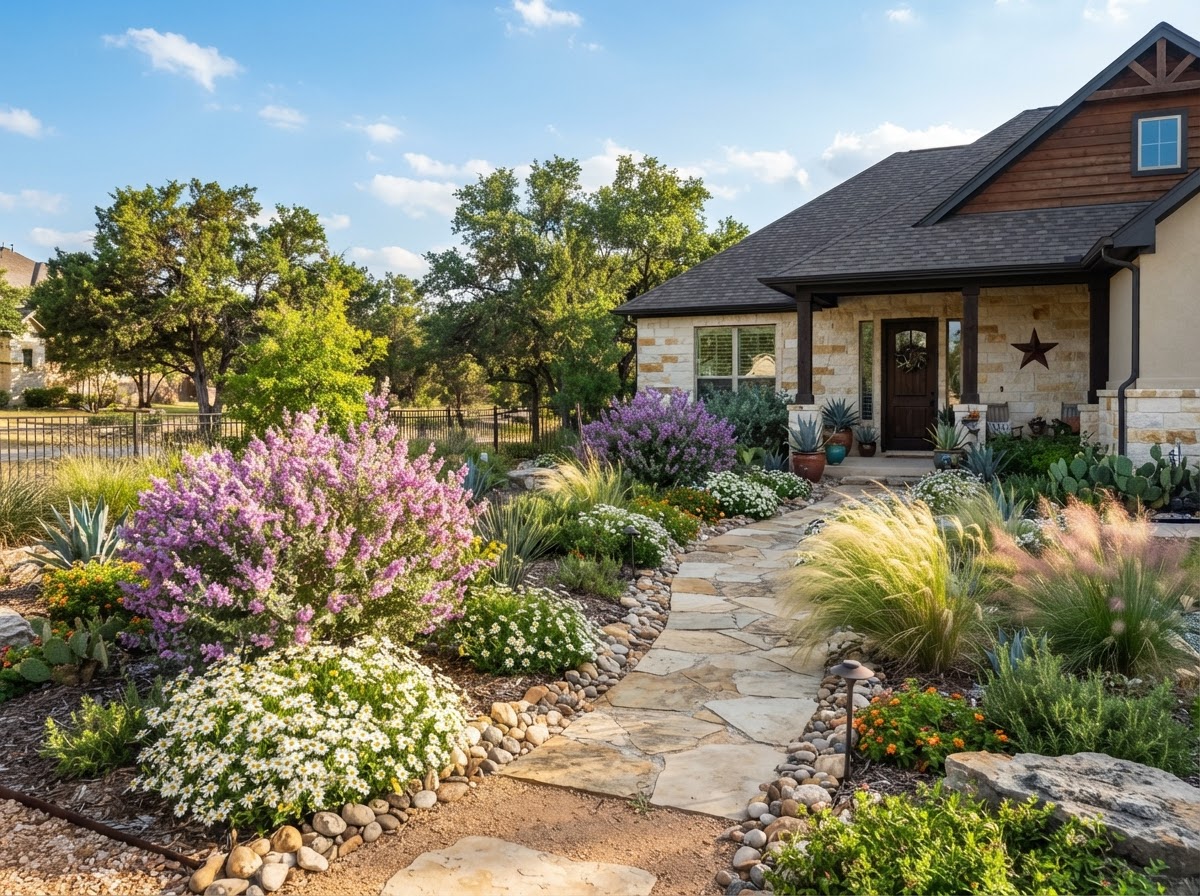
Cedar Park
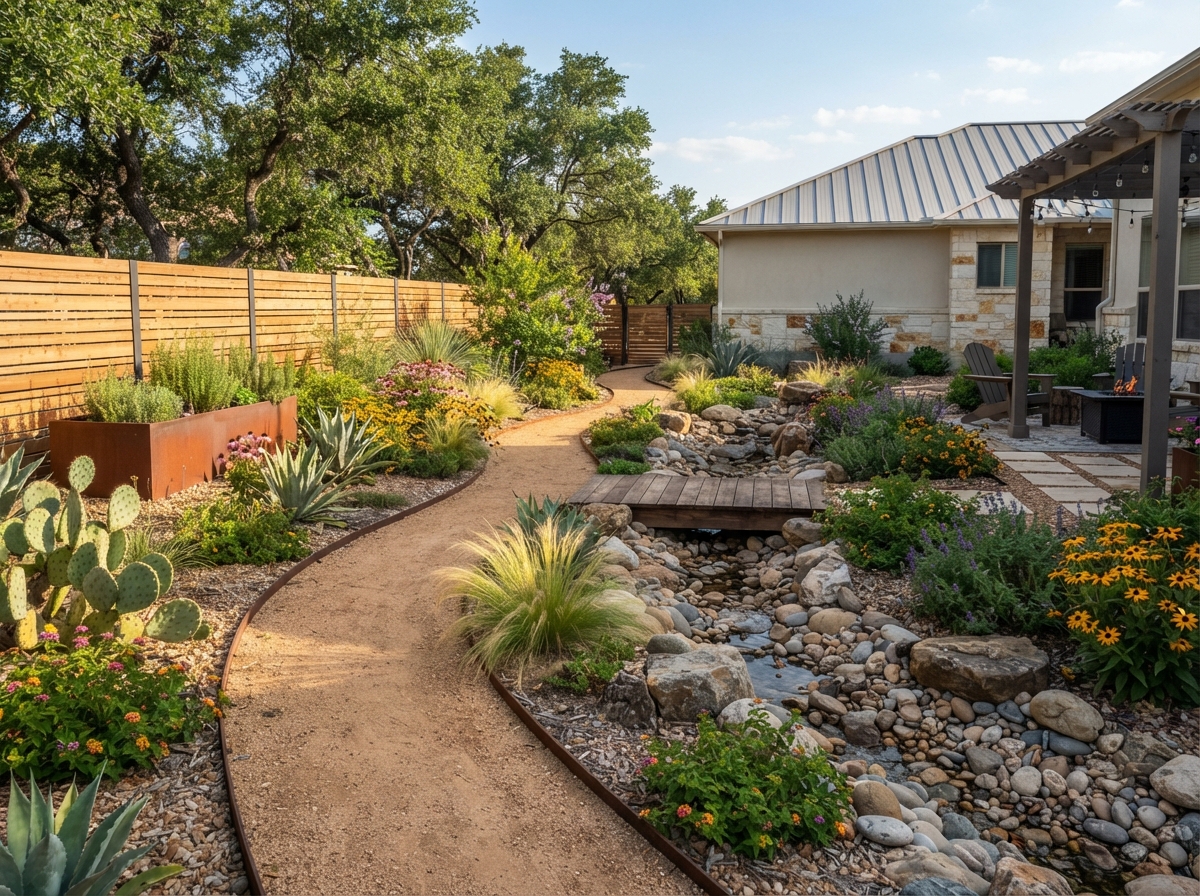
Round Rock
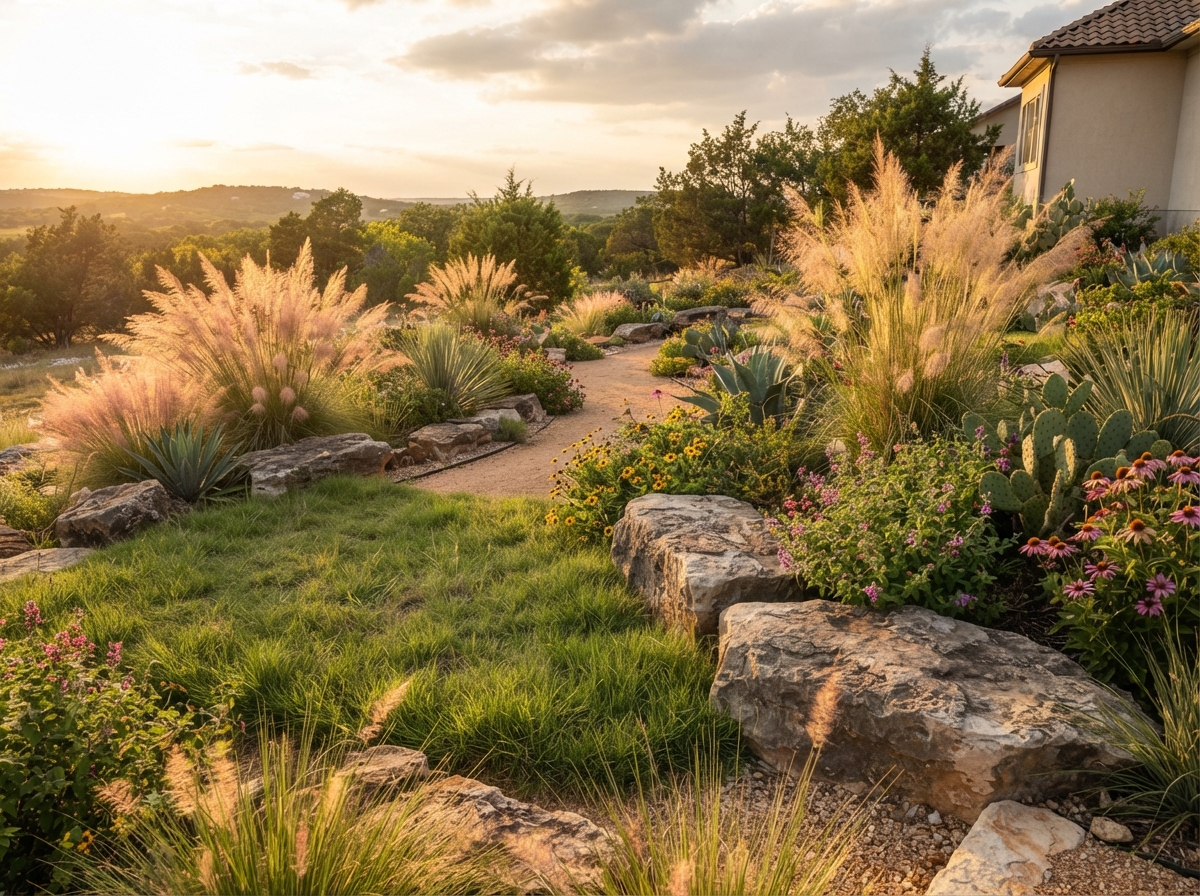
Leander
Georgetown
Lakeway
Austin
Frequently Asked Questions
Book a Xeriscape Consultation
Service areas across the Austin metro:
