
Austin IrrigationSystems, Installation & Repair
Use less water, not more. Systems zoned by sun and plant type, designed around Central Texas restrictions.
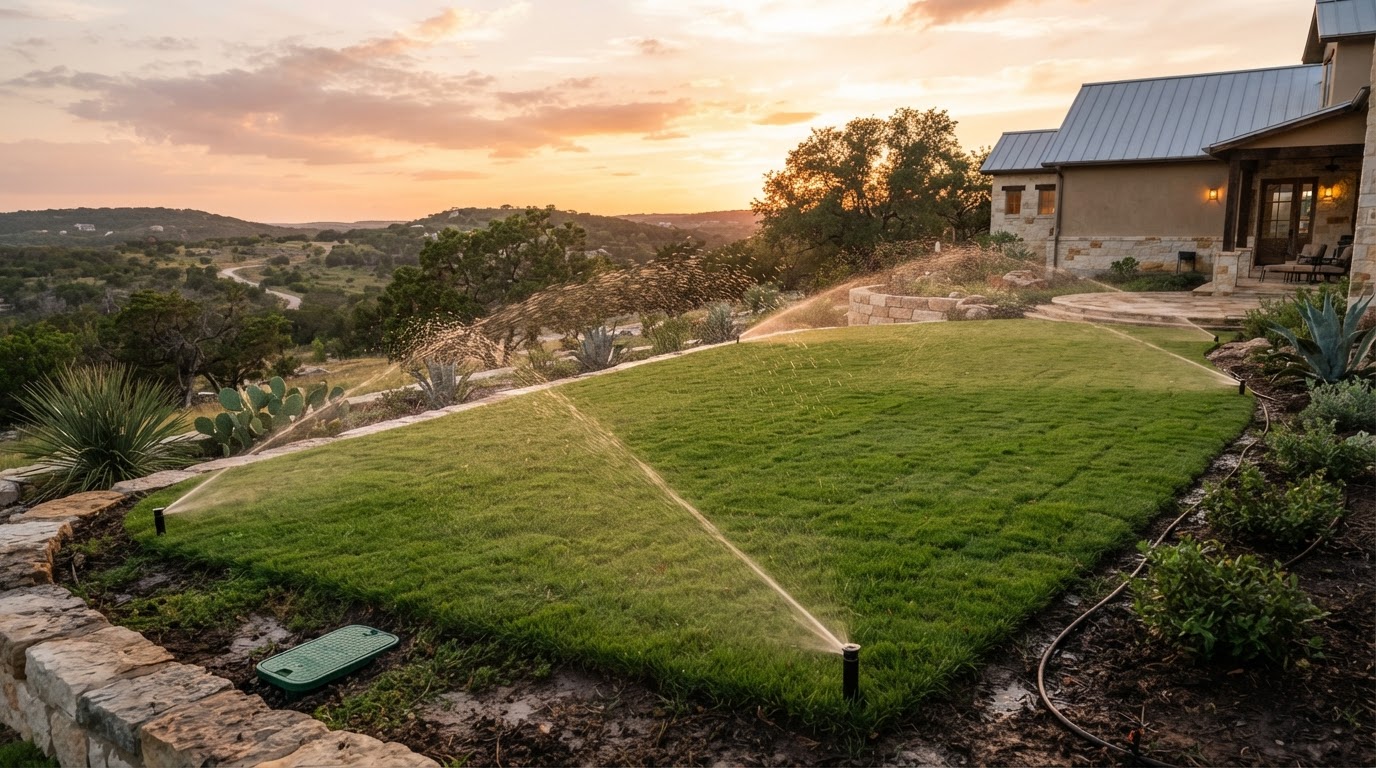
A well-designed irrigation system in Austin uses less water, not more, zoned by sun exposure and plant type, with drip on beds and rotors only where turf justifies them. We install new systems and rebuild older ones that were laid out before water restrictions existed.
How We Design a System
Zoning by sun and plant type
Shade beds, full-sun turf, foundation plantings and vegetable beds all need different amounts of water. We zone each area separately so nothing gets too much or too little.
Head spacing and matched precipitation
Every head in a zone must put down the same amount of water per minute. Mismatched heads leave wet spots and dry spots side by side, which is the most common problem we fix.
Pressure and flow calculation
Too much pressure turns water into mist that blows away before it hits the ground. We measure flow and pressure at the source and regulate each zone to its heads.
Why bad zoning wastes water
No controller, smart or dumb, can fix a zone that mixes shade and sun. The controller runs long enough for the dry spot, and the wet spot drowns. Zoning is the fix, not the timer.
Drip vs Spray vs Rotor
Drip
90%+ efficient
Beds, shrubs, trees and foundation plantings
Drip delivers water straight to the root zone with almost no evaporation loss. It is the most efficient method we install, and it keeps water off leaves and walls where disease and staining start.
Spray
65% efficient
Small turf areas under 15 feet wide
Spray heads throw a fixed fan of water fast. They work on small lawns but lose a fair amount to wind and evaporation. We use them where rotors cannot reach or would overspray the sidewalk.
Rotor
75% efficient
Larger turf areas, 25 feet and up
Rotors throw water in a slow, wide arc and cover big lawns with fewer heads. Matched precipitation rotors apply water evenly so you do not get wet spots and dry spots side by side.
Smart Controllers and Rain Sensors
Weather-based controllers
A weather-based controller pulls local forecast data and adjusts run times daily. A hot, dry week triggers longer runs. A cool, wet week skips them. You stop watering on a schedule and start watering to need.
Soil moisture sensors
A soil moisture probe tells the controller what the ground actually holds. If the soil is still wet from rain, the zone skips. It is the most direct way to stop overwatering, and it pays for itself in one Austin summer.
What they actually save
A smart controller paired with proper zoning typically cuts water use 20 to 40 percent against a fixed-schedule system. The controller alone helps, but the savings compound when the zones underneath it are right.
Texas requires a rain sensor or freeze sensor on every new irrigation system. We install them on every job, new or rebuilt.
Rebuilding an Older System
Many Austin systems were designed before current water restrictions and irrigate on a schedule the city no longer permits. A rebuild brings the layout up to code without tearing out the whole system.
- Rezoning by sun exposure and plant type, splitting mixed zones that water shade and sun on the same valve
- Converting bed zones from spray to drip, cutting water use on beds by 50% or more
- Replacing mismatched heads so every head in a zone puts down the same amount of water
- Updating the controller to a smart timer programmed for current Austin watering restrictions
- Adding or replacing the rain and freeze sensor, which Texas requires on every system
- Pressure regulation to stop misting, which is water blown away before it hits the ground
What It Costs
New System
Rebuild vs Replacement
What moves the number: yard size, zone count, water pressure at the source, and whether trenching hits limestone. Rock is the single biggest variable on an Austin install. We quote a fixed price after a site visit so the number does not move on you.
Water Savings Maths
Old spray-only system, fixed schedule
~45,000 gal
per summer
Zoned system with drip and smart controller
~22,000 gal
per summer
Savings on a typical Austin yard
~23,000 gal
per summer
These are rough figures for a 7,000 square foot yard with mixed turf and beds over a June through September season. Your actual savings depend on zone count, plant mix and how much of the old system was overwatering. The point is simple: a well-zoned system pays for itself in water savings over a few seasons.
Licensed Irrigation Work
Texas requires a licensed irrigator for irrigation installation and most modifications. Live Oak Studio uses one on every job, new or rebuild. We pull the permit, file the paperwork and handle the backflow test.
Unlicensed work can fail city inspection, void your backflow certification and leave you liable for water waste violations. It is not worth the risk, and most competitor pages do not mention it because they do not carry the licence.
Frequently Asked
Request a Quote
Tell us about your yard and we will call you with a plan and a number.